
PetOne Vet
National Veterinary AssociatesMedical
4.7216.00 Reviews
- Version
- 3.1.5
- Installs
- 50.00K
- Age Rating
- Everyone
Screenshots
Our Review of PetOne Vet
 Analysis by Appyee
Choosing a veterinary app is different from choosing another everyday utility. I am not only looking for a pleasant interface; I also want to know what happens when I enter details about my pet, how much control I keep over my account, and whether the app helps me act sensibly without pretending to replace a veterinarian. That is the lens I used with PetOne Vet, a free medical app from National Veterinary Associates.
My overall impression is that it is best understood as a companion for organizing pet care rather than a substitute for a clinic visit. Its audience is broad, with an Everyone age rating, and its Android listing shows a 4.7 average from around 945 ratings. That level of public response makes it easier to take seriously, although a rating alone cannot tell me whether the app fits my own veterinary routine.
The app has passed the early adoption stage without becoming difficult to approach. It has more than 50 thousand installs, and the current release is version 3.1.5. I see those figures as context rather than proof: an app can be popular and still be a poor match for someone who wants advanced medical records, emergency triage, or complete control over every piece of stored information.
What PetOne Vet is really useful for
I’d treat the app as a place to build a dependable pet-care routine, not as a system that will manage everything for me. Before relying on it, I’d decide which details I want to keep together and make a small habit of checking them before appointments or care handoffs. That practical baseline makes it easier to judge which settings are worth adjusting.
A practical place to begin with pet care
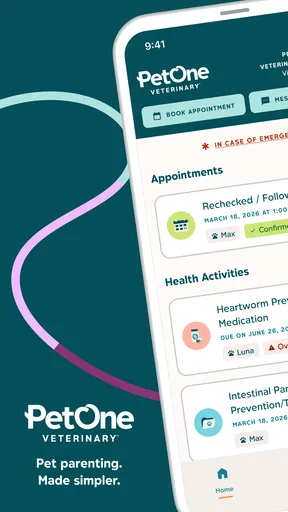
The strongest idea behind PetOne Vet is simplicity. Instead of treating pet health as a collection of disconnected reminders, messages, and paper documents, the app presents itself as a single digital starting point for pet parenting. I found that approach more useful for routine organization than for making medical decisions.
That distinction matters. If my dog suddenly has trouble breathing, I would not spend time exploring an app before contacting an emergency veterinary service. If I am trying to remember a routine appointment, prepare questions for a consultation, or keep pet-related information close while moving between home and the clinic, an app like this makes much more sense.
The medical category can create unrealistic expectations, so I would encourage new users to set their expectations early. PetOne Vet is not a diagnosis engine in my view, and it should not be treated as one. A screen can help me prepare and remember; it cannot examine an animal, notice subtle changes in behavior, or replace professional judgment.
How I would use it during an ordinary week
Imagine that my cat has a checkup coming up. During the week, I notice that she is drinking more water than usual, scratching one ear, and reacting badly to a new food. Rather than trusting myself to remember everything in the consultation room, I would use the app as a prompt to collect those observations and organize the conversation.
The useful habit is not simply opening the app when something goes wrong. I would make a short note as soon as I notice a change, then review those notes before the appointment. That prevents the common problem of remembering only the most dramatic symptom and forgetting timing, frequency, or possible triggers.
There is also a valuable trade-off here. A centralized pet-care tool can reduce mental clutter, but it can also encourage me to assume that everything important is safely stored inside one place. I would still keep essential contact details and critical medical information available in another form, especially before traveling or when caring for an animal that needs frequent treatment.
Who will get the most from it
I think PetOne Vet is a good fit for first-time pet parents, people managing care for several animals, and households where more than one person helps with appointments or daily routines. It can also suit anyone who tends to lose paper records or remember veterinary questions only after leaving the clinic.
Its accessible positioning should help people who do not want a complicated medical dashboard. The free price removes an obvious barrier to trying it, which is useful when I am still deciding whether a digital pet-care workflow actually improves my routine. I would test it with one animal first rather than immediately moving every record into a new system.
I would be more cautious if I needed a highly specialized record system for chronic illness, detailed medication tracking, laboratory history, or coordination across several independent clinics. In those situations, the clinic’s own portal, a dedicated record tool, or a carefully maintained document may be more suitable. The better option is the one that matches the complexity of the care, not necessarily the one with the most attractive interface.
Trust starts with the developer and the boundaries
National Veterinary Associates is identified as the developer, which gives the app a clearer veterinary context than an anonymous symptom-search utility. That does not automatically answer every privacy question, but it does help me understand the intended setting: pet care connected to a professional veterinary environment rather than casual social sharing.
I still separate institutional identity from personal trust. Before entering sensitive information, I would read the app’s visible privacy notices and permission prompts carefully, then decide whether each requested access makes sense for the task I want to perform. I would not grant access automatically just because the app is in the medical category.
For me, the most trustworthy behavior is transparent behavior. I want to see what information is being requested, why it is needed, and whether I can continue using the useful parts without accepting unrelated access. If a prompt appears at an unexpected moment, I would pause instead of tapping through it, particularly when I am adding details about a pet’s health or household.
Controls I would check before relying on it
Account control is part of the experience, not an administrative detail. When I set up a pet-care app, I look for clear ways to review my profile, correct an animal’s information, manage notifications, and sign out on a shared device. I also want to know whether an account can be removed if I decide the service no longer fits my needs.
I would make these checks before building a long history inside the app. That is a practical precaution: changing tools later is easier when I know how to export, copy, or otherwise preserve important information. I would also avoid using a shared household login if the app offers individual accounts, because separate access makes it easier to understand who can see or change a record.
Notifications deserve special attention. A reminder about a routine task can be helpful, but repeated alerts can become background noise. I would enable only the notifications that support a real habit, then review them after a week. If I start dismissing everything automatically, the feature has stopped helping me.
Where privacy becomes especially important
The sensitive moments are not limited to the first sign-up screen. They appear when I enter a pet’s diagnosis, medication details, appointment history, or notes about behavior. Some of that information may also reveal something about my household, location, schedule, or spending patterns.
My approach would be deliberately selective. I would enter what is needed to make the care workflow useful, but I would avoid adding unrelated personal details. I would also think twice before placing highly sensitive information in free-text notes when a concise, relevant description would do the job.
Device security matters just as much as the app’s own controls. On a shared phone or tablet, I would sign out when appropriate and use the device’s lock features. If I replace the phone, I would check which account is connected before handing the old device to someone else. These steps are simple, but they are often more practical than assuming an app alone can protect every situation.
What I would do with medical information
I would use PetOne Vet to support a conversation with a veterinarian, not to settle a serious question on my own. If the app helps me organize symptoms or appointment details, I would show that information to the professional and ask what should happen next. The app can improve the quality of my preparation without becoming the authority.
This is particularly important with medication. I would not change a dose, stop treatment, or combine products because a digital record makes the information easy to view. An organized screen can make me feel more confident, but confidence is not the same as clinical confirmation.
For urgent situations, I would keep a separate emergency plan: the clinic’s phone number, the nearest emergency provider, and a clear idea of which symptoms require immediate help. An app is convenient when I have time to think. Emergencies often leave no room for browsing.
How it compares with the usual alternatives
The most obvious alternative is a clinic’s own portal. That option may be better when I need official appointment records, direct communication, or information already tied to a specific veterinary practice. PetOne Vet may be more appealing when I want a broader pet-parenting workflow instead of a tool limited to one clinic’s system.
A second alternative is a spreadsheet, notes app, or paper folder. Those options offer strong personal control and do not require learning another service. They can be perfectly adequate for one healthy pet with occasional visits. Their weakness is consistency: shared access, reminders, and a clear routine can be harder to maintain manually.
Dedicated pet-health trackers may offer more specialized detail, especially for medication schedules or long-term conditions. I would choose one of those when its specific tracking depth solves a problem that PetOne Vet does not solve for me. I would choose PetOne Vet when simplicity and a veterinary-oriented starting point matter more than extensive customization.
The trade-off is therefore quite clear. A general-purpose approach is easier to adopt, but it may not satisfy an owner who needs a clinical archive. A clinic portal can be authoritative for that clinic, but less convenient for managing care across different providers. A paper system is private and flexible, but depends heavily on personal discipline.
Small habits that make the app more useful
My first tip would be to create a consistent naming and note-taking habit. If I describe the same symptom in a different way every time, later review becomes confusing. Short entries with a date, what I observed, and what changed afterward are more useful than long emotional descriptions.
My second tip would be to review information before an appointment rather than during it. That gives me time to spot gaps and prepare focused questions. It also reduces the temptation to use the app as a live distraction while the veterinarian is explaining a treatment plan.
My third tip would be to treat access as part of the setup. I would check notification choices, review permissions when prompted, and avoid storing more personal detail than the care task requires. These choices do not make the app less useful; they help keep the workflow proportionate to the information involved.
A fourth useful habit is to keep a backup of information that would be difficult to reconstruct. Even if the app becomes the main place I organize pet care, I would preserve essential medication and emergency details separately. That protects me from being locked out of any single account, device, or service at the moment I need the information.
Where the experience may create friction
The simplicity that makes PetOne Vet approachable may also feel limiting to experienced pet owners. Someone who wants deep customization, extensive historical analysis, or a complete medical archive could outgrow a straightforward pet-parenting workflow. That is not necessarily a design failure; it is a reminder that convenience and depth rarely arrive in equal measure.
There is also a learning curve whenever I move from familiar notes or paper records to a dedicated app. I have to decide what belongs there, build a habit, and remember to keep information current. If I only open it during stressful moments, I may find that the record is incomplete when it matters most.
Another possible source of frustration is dependence on account access and device availability. I would not assume that a digital record is always reachable in every circumstance. Before a trip, appointment, or handoff to a pet sitter, I would prepare the information I am likely to need rather than relying on last-minute access.
My cautious verdict
PetOne Vet is worth trying if I want a free, approachable medical companion for organizing everyday pet care and preparing better conversations with a veterinarian. The Everyone rating makes it broadly accessible, the veterinary developer gives it a relevant context, and the strong public response suggests that many users find the concept useful.
I would recommend it to a friend with one qualification: use it as an organizer, not as a replacement for professional care. Start with the information that genuinely supports your routine, inspect permission and account choices before settling in, and keep critical emergency details available elsewhere.
I would skip it in favor of a clinic portal or a more specialized tracker if my animal has complex ongoing treatment or if I need formal records from one provider. I would also stay with paper or a basic notes tool if adding another account feels like more work than it saves.
For the right user, the app’s value is not a dramatic medical breakthrough. It is the quieter improvement of being better prepared, less forgetful, and more deliberate about pet-care information. That is a sensible promise, and in my experience it is also the safest way to judge PetOne Vet: by whether it gives me clearer control over routine care without encouraging me to mistake convenience for veterinary expertise.
Verdict
Strengths of PetOne Vet
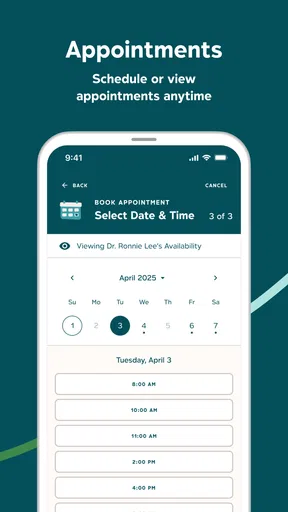
- Easy access to veterinary appointments and pet care services.
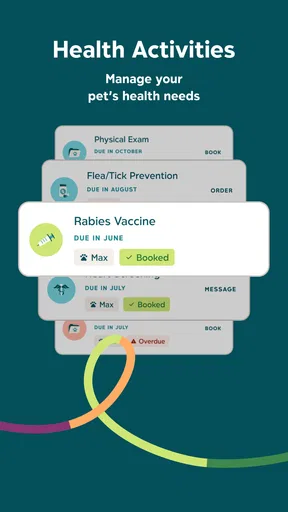
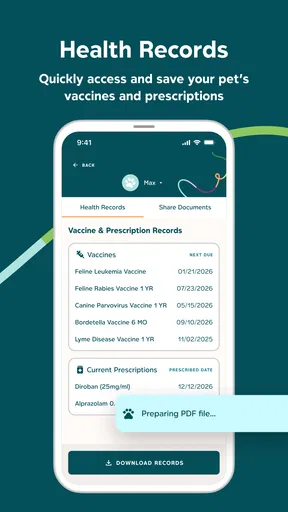
- Keeps important pet health information organized in one place.
- Convenient way to contact participating veterinary clinics.
- Helpful for managing reminders, treatments, and follow-up care.
- Useful for owners with multiple pets or recurring appointments.
Limitations of PetOne Vet
- Availability and features may depend on your local veterinary clinic.
- Some services may require an account or clinic invitation.
- Not a substitute for emergency veterinary treatment.
- App usefulness is limited if your vet does not support PetOne Vet.
- Notifications may require permission and reliable internet access.
Similar Picks in This Category
View All
WebMD: Symptom Checker
WebMD, LLC4.1

Microphone Amplifier
DOSA Apps4.2

Anatomy Learning - 3D Anatomy
3D Medical OU4.5

Period Tracker and Calendar
SimpleInnovation4.9

GoodRx: Prescription Coupons
GoodRx4.8

CVS Health
CVS Pharmacy4.5
Frequently Asked Questions
What is PetOne Vet, and what can I use it for?
PetOne Vet is a veterinary-focused app designed to help pet owners manage essential aspects of their animals’ care. Depending on the services available in your area, it may help you find veterinary information, organize appointments, access clinic services, review pet health details, or communicate with professionals. It should be viewed as a support tool rather than a replacement for an in-person veterinary examination.
Is PetOne Vet suitable for emergencies or urgent pet health problems?
PetOne Vet should not be relied on as the only solution during a serious or life-threatening emergency. If your pet is having difficulty breathing, experiencing severe bleeding, showing signs of poisoning, suffering seizures, or becoming unresponsive, contact an emergency veterinary clinic immediately. The app may help you locate or contact a provider, but professional urgent care should always take priority over using any digital feature.
Can I use PetOne Vet to book appointments for my pet?
The availability of appointment booking depends on the veterinary practices and services connected to PetOne Vet. In supported locations, the app may allow you to request or manage consultations, vaccinations, checkups, or other treatments. Before relying on a booking, confirm the date, time, clinic address, and appointment status, since features and participating providers can vary by region or practice.
What information do I need to provide when setting up PetOne Vet?
You may be asked to create an account and enter details such as your name, contact information, pet’s name, species, breed, age, medical history, vaccination records, or veterinarian information. Providing accurate data can make appointments and health tracking more useful. However, review the app’s privacy policy before submitting sensitive information and only provide details that are necessary for the service.
Is PetOne Vet free to download and use?
The download price and available features may depend on the version of PetOne Vet, your country, and the veterinary provider using the platform. Some functions may be free, while consultations, clinic services, premium tools, or other transactions could involve separate charges. Check the app store listing and any payment screen carefully, including subscription terms, before confirming a purchase or booking.
